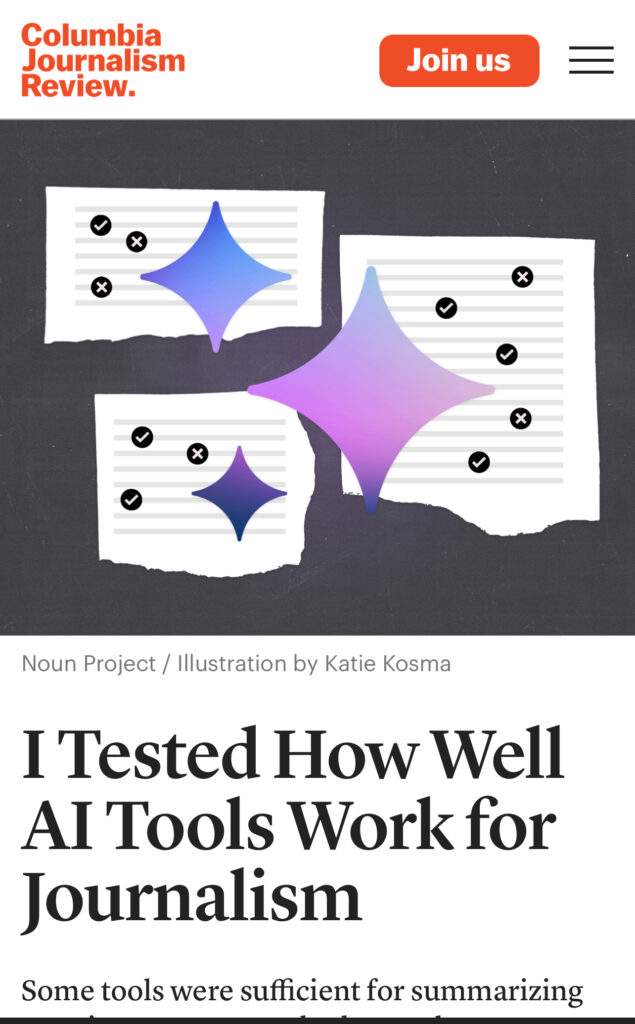
As artificial intelligence continues to reshape societies, the gap between technological advancement and public understanding is becoming more pronounced. I contributed to closing that gap by serving as a trainer in the CJID AI and Tech Accountability Reporting Fellowship, an initiative designed to equip journalists across Africa with the tools to critically report on emerging technologies.
The fellowship brought together reporters working at the intersection of technology, governance, and public interest journalism. My role was to guide them through the complexities of reporting on artificial intelligence in a way that is both accessible and deeply accountable.
This was not about teaching tools alone. It was about shaping how journalists think.
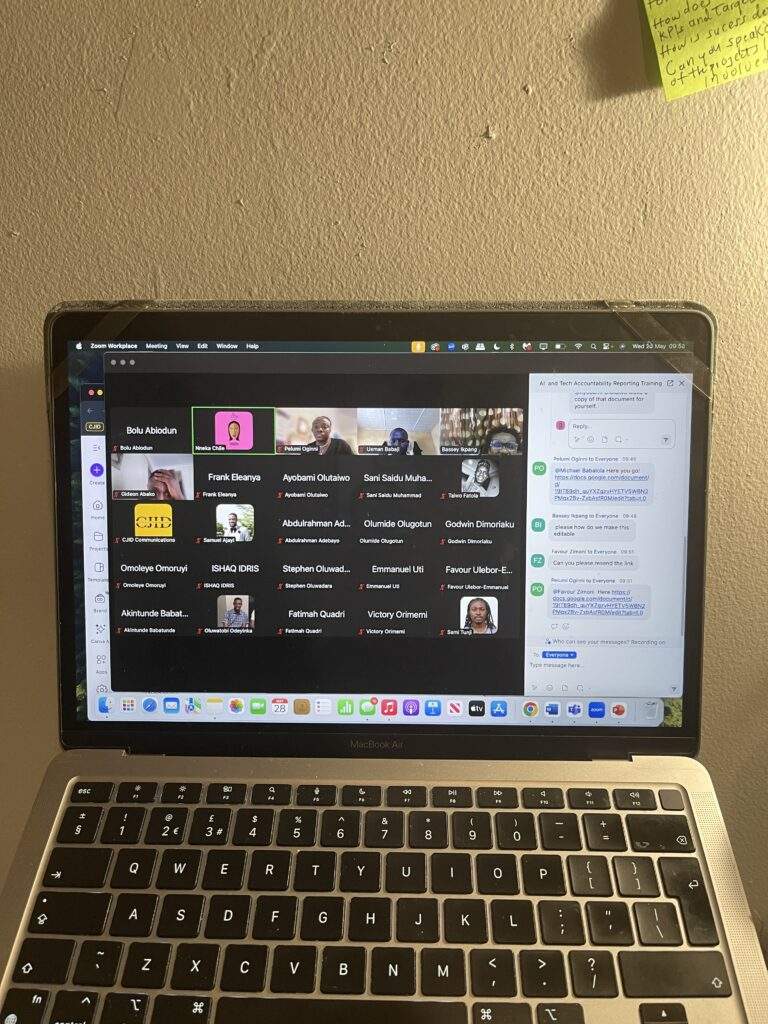
What the Conversation Explored
The training sessions focused on helping journalists move beyond surface level coverage of artificial intelligence into more rigorous, investigative reporting. I led discussions on how AI systems function, where bias and opacity exist, and how these systems impact governance, labor, and everyday life.
We explored how to identify meaningful story angles within a highly technical field. Rather than focusing on the novelty of AI, I encouraged fellows to ask deeper questions. Who is building these systems? Who benefits from them? Who is excluded or harmed? And what does accountability look like in this space?
A key part of the training involved translating complexity into clarity. Many AI related topics can feel abstract or inaccessible. I worked with fellows on how to break down these concepts into stories that are understandable, relevant, and grounded in real world impact.
We also discussed verification and ethical considerations. Reporting on AI requires a careful approach to sources, claims, and technical interpretation. I guided fellows on how to critically assess information, avoid amplifying hype, and maintain strong editorial standards when covering emerging technologies.
The sessions were interactive by design. Journalists brought their own story ideas, challenges, and regional contexts into the conversation. Together, we refined angles, strengthened investigative approaches, and built a shared understanding of what meaningful AI accountability reporting looks like.
Serving as a trainer in this fellowship marked an important evolution in my work. I was no longer only applying my expertise within newsrooms and research environments. I was helping to transfer that knowledge across the profession.
It also reinforced a core belief I carry across all my work. The future of journalism will depend not only on how we adopt new technologies, but on how well we interrogate them.
Building that capacity within newsrooms is essential.
Presentation slide on Reporting AI across sectors – https://www.canva.com/design/DAGn5RI8N4g/V2AoLnAtu28L1HDiMh8y3g/view?utm_content=DAGn5RI8N4g&utm_campaign=designshare&utm_medium=link2&utm_source=uniquelinks&utlId=h9f47432099
Presentation slide on Story lab – https://www.canva.com/design/DAGoTFVz0Pc/-bzkhejqBykiJFDDyT7gNQ/view?utm_content=DAGoTFVz0Pc&utm_campaign=designshare&utm_medium=link2&utm_source=uniquelinks&utlId=ha84a6cabe9